

Yes. Motorcyclists in California can legally ride between rows of stopped or moving traffic. After a crash, though, the other driver’s insurer may argue that splitting caused it, and a Los Angeles motorcycle accident lawyer can review what happened.
Is Lane Splitting Legal in California on Every Road?
The California Highway Patrol (CHP) states that lane splitting is legal, and Vehicle Code 21658.1 has defined it since January 1, 2017. The definition covers divided and undivided streets, roads, and highways, so it applies on city streets and freeways alike.
Under the law, lane splitting means riding a motorcycle with two wheels on the ground between rows of stopped or moving vehicles in the same lane. The California lane splitting law sets no separate speed limit, though posted speed limits still apply. Instead, it lets the CHP publish educational safety guidelines.
One limit still applies. Riding on the shoulder is not lane splitting, and the CHP states that shoulder riding is illegal.
What’s the Difference Between Lane Splitting and Lane Filtering?
Lane splitting usually means riding between lanes of moving traffic. Lane filtering usually means moving between stopped cars, often to reach the front at a red light. California law does not use the term “lane filtering,” but its definition of lane splitting covers both.
Vehicle Code 21658.1 applies to rows of “stopped or moving vehicles.” So is lane filtering legal in California? In practice, yes. Riding between stopped cars falls within the lane splitting definition, so the same rules and CHP guidance apply.
What Does the CHP Recommend for Lane Splitting Safely?
The CHP says lane splitting is not for inexperienced riders. Its guidance centers on speed, space, and visibility. In short, keep the speed gap small, choose the safer lanes, steer clear of large vehicles, and make sure drivers can see you.
The CHP’s tips for riders include:
- Consider lane width, the size of nearby vehicles, and roadway, weather, and lighting conditions.
- Watch your speed, since danger rises with the speed difference between you and traffic.
- Split between the far left lanes when possible.
- Avoid splitting next to big rigs, buses, motorhomes, and other large vehicles.
- Stay off the shoulder, since riding there is illegal.
- Stay out of blind spots and avoid lingering between vehicles.
- Wear brightly colored or reflective gear and use your high beam during daylight.
These are educational guidelines, not law. Still, they show what safer splitting looks like.
Who Is at Fault if a Motorcyclist Is Hit While Lane Splitting?
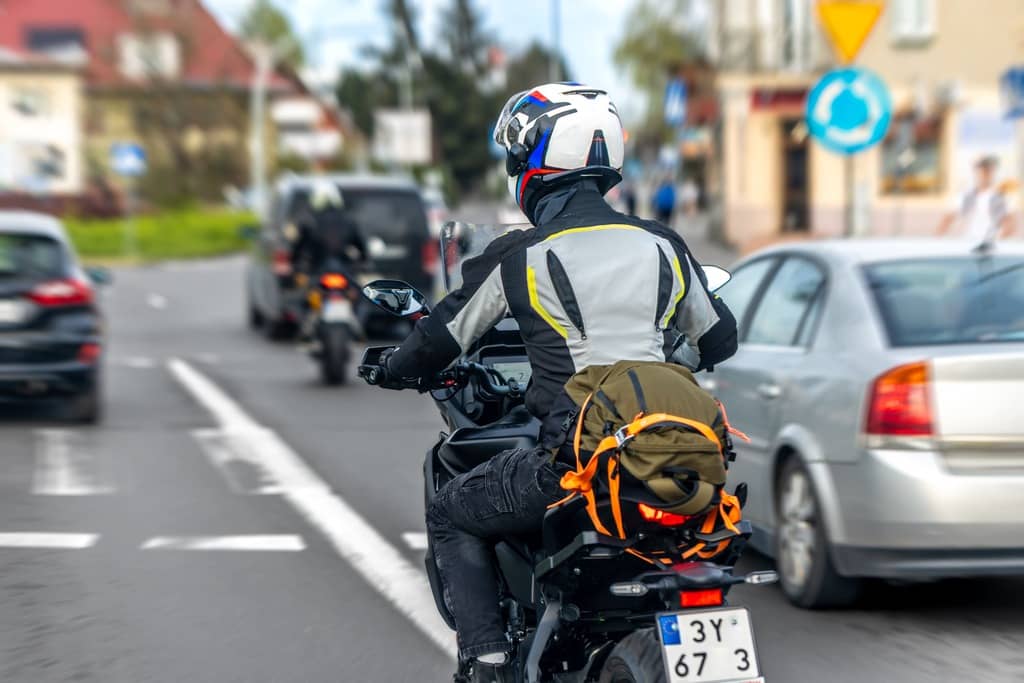
Fault depends on how each person acted, including how the rider was splitting. Lane splitting alone does not make the rider automatically at fault, and the driver is not automatically at fault either. The facts of each crash decide it.
California uses a rule called comparative fault. In plain terms, each person’s share of the blame is weighed, and any compensation may be reduced by the injured person’s share. For example, if a rider is found 20 percent responsible, the amount they recover may be reduced by 20 percent. A rider who shares some of the blame may still be able to recover part of their losses.
Factors that often come up after a lane splitting accident include:
- Speed of the motorcycle compared with the flow of traffic.
- Lane changes made without a signal or a mirror check.
- Doors opened into the rider’s path.
- Size of the vehicles involved, such as a big rig or bus.
- Road, weather, and lighting conditions at the time.
Photos, witness statements, dashcam video, and the police report help show what happened. Insurance adjusters may use the same evidence to argue that the rider caused the crash, so it helps to have a lawyer gather it early. Crashes with commercial trucks raise added issues, covered in the firm’s guide to truck accident claims.
What Should You Do After a Lane Splitting Accident?
Your safety comes first. Then document everything you can right away, because fault in a lane splitting crash is often disputed and details fade fast. These steps can help protect your health and your claim, whether the crash happened on a freeway or a city street.
- Move to a safe spot and call 911 if anyone is hurt.
- Ask the responding officer, whether CHP or local police, for the report number.
- Get checked by a doctor, even if you feel fine.
- Photograph your motorcycle, the other vehicle, lane positions, and the road.
- Collect the driver’s name, insurance, and license plate, plus contact details for any witnesses.
- Stick to the facts when you talk to the other driver and the police.
- Keep your helmet, jacket, and other gear instead of throwing them away.
- Talk to a lawyer before giving a recorded statement to the other driver’s insurer.
Deadlines matter too. In California, you generally have two years from the date of the injury to file a personal injury lawsuit (Code of Civil Procedure 335.1). A claim against a public agency, such as one over a dangerous road, usually must be presented within six months of the injury (Government Code 911.2).
Frequently Asked Questions
Can motorcycles split lanes in California on the freeway?
Yes. California’s lane splitting definition covers divided and undivided roads, including highways. The CHP says splitting between the far left lanes is typically safer than splitting between other lanes. It also advises riders to avoid splitting next to large vehicles like big rigs, buses, and motorhomes.
Can you lane split in California at any speed?
No. Posted speed limits still apply while you split, even though the law sets no separate lane splitting limit. The CHP warns that danger increases at higher speed differentials and as overall speed increases. Keeping your pace close to surrounding traffic follows that guidance.
Does California’s lane splitting law cover three-wheeled motorcycles?
No. Vehicle Code 21658.1 defines lane splitting as riding a motorcycle with two wheels in contact with the ground. Three-wheeled motorcycles and trikes fall outside that definition. If you ride a three-wheeler and were hurt in a crash, a lawyer can review how the rules apply to your situation.
Can a driver legally block a motorcyclist who is lane splitting?
No. The CHP states that intentionally blocking or impeding a motorcyclist in a way that could cause harm is illegal. Opening a vehicle door to impede a rider is also illegal. The CHP also tells drivers to check mirrors and blind spots and to signal before changing lanes.
Can I still file a claim if I was lane splitting when I was hit?
Yes, you may be able to. Lane splitting is legal in California, so it does not bar a claim on its own. Under comparative fault, any share of blame assigned to you may reduce your recovery, but it does not automatically erase it.
How much does it cost to talk to Nourmand Legal?
Nothing. The consultation is free, and there are no attorney’s fees unless there is a recovery. You can call (800) 550-9816 at any hour or use the online contact form to ask about your lane splitting accident without paying anything up front.
Talk to Nourmand Legal About Your Lane Splitting Accident
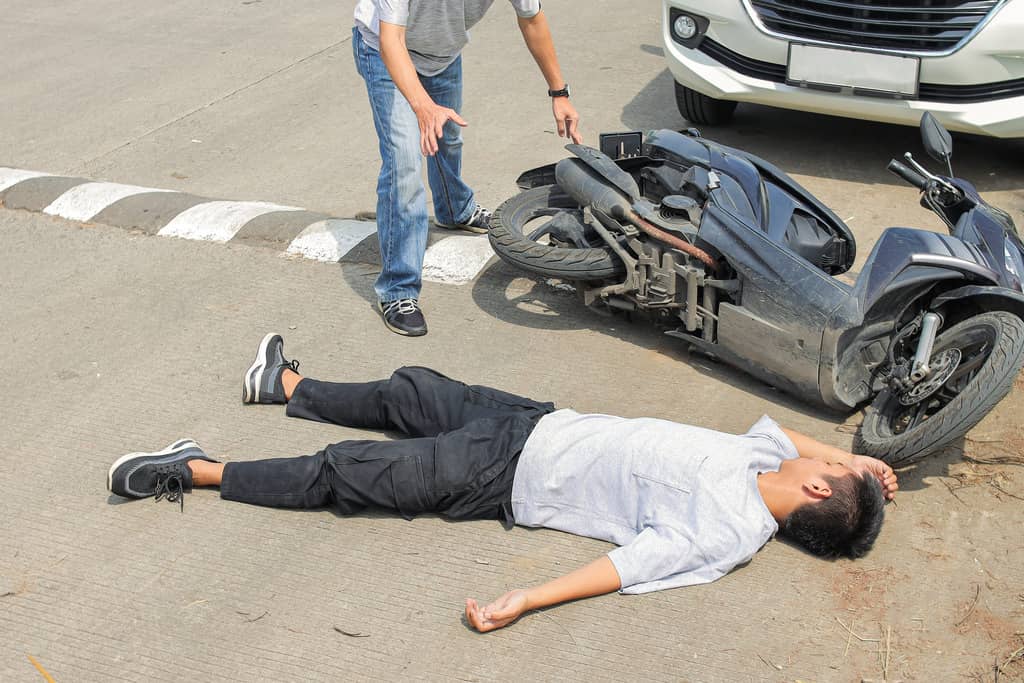
If you were hurt in a lane splitting accident, you do not have to sort out fault and insurance on your own. A Los Angeles motorcycle accident lawyer at Nourmand Legal can review the report, the evidence, and your injuries, then explain what may come next.
You work directly with the attorney handling your case, from the first call to the final resolution. The firm handles serious and catastrophic injuries and has offices in Los Angeles, Beverly Hills, San Diego, San Francisco, and San Jose.
Free consultation. Available 24/7. No attorney’s fees unless there is a recovery. Call (800) 550-9816 or contact Nourmand Legal to tell the team what happened.
